
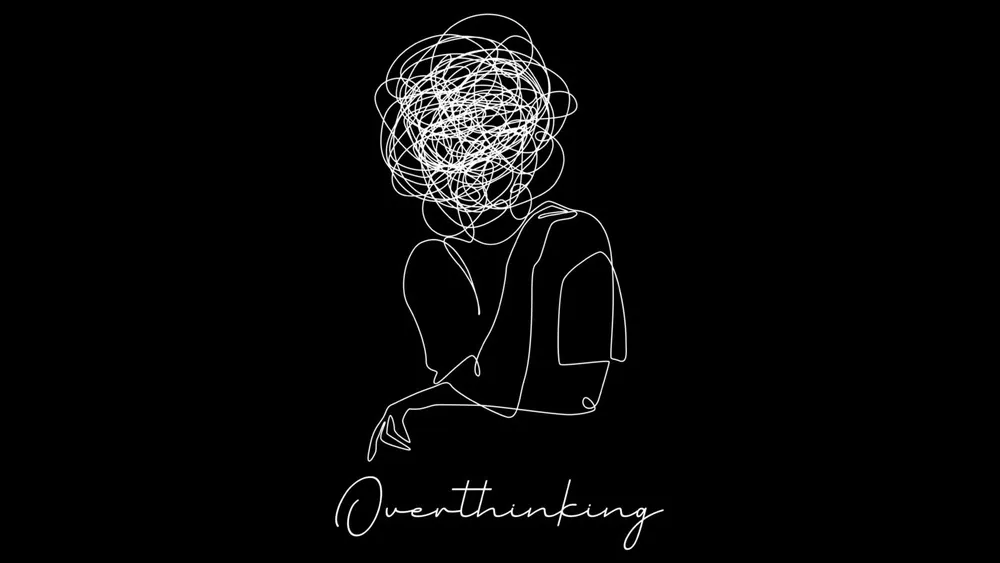
When thinking stops helping you decide and starts keeping you stuck
I went back and forth about leaving hospital nursing for about a year and a half.
A year and a half.
And it wasn’t because I hadn’t thought it through.
I had.
When I first started working at that hospital, I thought I’d be there forever. I had worked incredibly hard to become a nurse, and this was where I thought I’d build my career.
Then life changed.
I was pregnant and working in a hospital during COVID. I was burned out. I wanted more time with my kids. I was frustrated with mandates, protocols, and decisions being made in healthcare that I didn’t always agree with or feel good about.
I had reasons to make a change.
But leaving still felt enormous.
Am I throwing away all that schooling?
What if I lose my nursing skills?
What are people going to think of me?
Am I letting my husband down?
What if coaching doesn’t work out?
I asked people what they thought.
Then I asked other people.
Sometimes I asked the same people again, even after they’d already answered me.
At some point, I wasn’t gathering new information anymore.
I was trying to get certainty from questions I’d already answered.
Why Do We Overthink?
There isn’t one reason.
Sometimes we’re trying to create certainty.
Sometimes it’s perfectionism. Fear of disappointing someone. Fear of rejection or criticism. Anxiety. Low confidence in our own decisions. Past experiences that taught us mistakes weren’t safe. Feeling responsible for everybody else’s reactions.
Sometimes we’re trying to avoid a feeling.
Sometimes we’re trying to avoid regret.
And sometimes we’re genuinely dealing with a complicated decision that deserves time and careful thought.
That’s important because the answer to overthinking isn’t to stop thinking.
Some decisions should take time.
The question is whether your thinking is still helping you make the decision.
When Thinking Starts Keeping You Stuck
Researchers actually studied this in people’s everyday lives.
In a 2024 study, 247 people reported on real decisions they were making throughout the day. Researchers found that people who had a harder time tolerating uncertainty were more indecisive and more likely to use behaviors intended to make deciding feel safer. More importantly, greater use of these behaviors predicted more indecisiveness later (Appel et al., 2024).
In other words, some of the things we do to finally feel certain enough to decide may become part of what’s keeping us stuck.
That one makes sense to me.
Asking someone what they think can be helpful.
Asking another person might give you a perspective you hadn’t considered.
But what about the fifth time you ask?
Are you still getting new information?
Or did the last answer make you feel better for a little while, until the uncertainty came back and you needed another one?
I can see the difference now in my own decisions.
| Healthy Reflection | Overthinking |
|---|---|
| Leads to solutions or insights | Stuck on the same problem |
| Balanced, limited in time | Feels endless, exhausting |
| Focused on facts | Focused on fears and “what ifs” |
| Reduces stress | Increases stress and anxiety |
Thinking Carefully Isn’t the Same as Overthinking
Many years ago, I wrestled with leaving a different nursing job.
I was working in a nursing home where the nurse-to-patient ratio and everything I was responsible for had reached a point where I was concerned about practicing safely.
I still worried about leaving.
What would people think?
Who would take care of my patients?
Was I abandoning people who needed me?
I weighed the pros and cons of two different hospitals before deciding where to go.
Eventually, I made my decision.
Later, corporate came in trying to address ongoing problems and asked what they could do to get me to stay.
My answer was simple.
Nothing. I’d already made my decision.
I had thought carefully about a difficult decision and eventually reached an answer.
That’s different from thinking about the same decision for another six months hoping it will somehow become risk-free.
| Area | Common Overthinking Patterns | Underlying Emotion |
|---|---|---|
| Work | Replaying meetings, worrying about emails, fear of mistakes | Insecurity, fear of judgment |
| Home | Obsessing over chores, schedules, small details | Desire for control, anxiety |
| Relationships | Second-guessing conversations, doubting your worth | Fear of rejection, shame |
Sometimes You’re Looking for a Guarantee
That’s what I think was happening when I spent a year and a half wrestling with hospital nursing.
At first, I dropped down to casual status.
Eventually, I left the hospital entirely.
And I left before I had even started my business.
I didn’t have some perfectly mapped-out entrepreneurial plan waiting for me on the other side.
I was exploring coaching, but I couldn’t know where it would lead.
At some point, I remember telling myself:
“If all I get out of this coaching is becoming a better listener, it will have been worth it.”
That changed something.
I didn’t need coaching to prove that it would become a successful business before I allowed myself to pursue it.
I didn’t need to know whether I’d ever return to bedside nursing.
I didn’t need to know what the rest of my professional life would look like.
After spending so much time trying to figure out the whole future, I finally needed to decide what to do next.

Credit: greggvanourek.com
What If You Make the Wrong Decision?
You might.
I’ve made decisions I wouldn’t make again.
I’ve said yes when I should have said no. I’ve said no when I probably should have said yes. I’ve trusted people I shouldn’t have trusted.
Self-trust isn’t believing you’ll always make the right decision.
It’s knowing that if something doesn’t turn out the way you hoped, you can meet yourself there too.
You can change direction.
You can learn.
You can apologize.
You can gather new information and make another decision.
Sometimes the freedom isn’t in finally knowing you’re right.
It’s realizing you can survive being wrong.

Sometimes Overthinking Is a Trust Problem
For me, overthinking eventually became about more than decision-making.
It became about trust.
Could I trust myself enough to make a decision without knowing exactly how it would turn out?
Could I trust that I didn’t need to see the entire path before taking the next step?
And as a Christian, could I trust God without demanding that He show me exactly where the next five steps would lead first?
I ended up writing an entire 30-day devotional about that tension: Stop Overthinking. Start Trusting God: When You Know What to Do… But Still Don’t Do It.
Because knowing and doing are two different things.
Sometimes we’ve already prayed.
We’ve researched.
We’ve asked people we trust.
We’ve made the list.
We’ve thought about it from seventeen different directions.
And we’re still standing there waiting for certainty.
[Read Stop Overthinking. Start Trusting God → INSERT BOOK LINK]
Faith doesn’t always mean knowing how things will turn out.
Sometimes it means taking the next faithful step without requiring a guarantee first.
You Probably Don’t Need Another Hour of Thinking
The goal isn’t to become someone who never second-guesses herself.
It’s learning to recognize when thinking has given you what it can.
Another opinion might not solve it.
Another list might not solve it.
Another hour replaying the conversation might not solve it.
Because sometimes the problem isn’t that you don’t have enough information.
You just don’t like how much uncertainty is left after you’ve gathered it.
And uncertainty doesn’t necessarily mean you haven’t found the answer.
Sometimes it’s simply part of choosing.
You don’t need enough clarity to know exactly how the story ends.
You need enough clarity to take the next step.
Reference
Appel, H., Krasko, J., Luhmann, M., & Gerlach, A. L. (2024). Intolerance of uncertainty predicts indecisiveness and safety behavior in real-life decision making: Results from an experience sampling study. Journal of Research in Personality, 110, 104490. https://doi.org/10.1016/j.jrp.2024.104490
Frequently Asked Questions
What Is The Main Difference Between Overthinking And Problem-solving?
Overthinking is circular and focused on fears or “what ifs.” It rarely leads to solutions. Problem-solving is focused, time-limited, and leads to action or learning. If your thinking helps you move forward, it’s problem-solving; if it leaves you stuck, it’s overthinking.
Can Overthinking Cause Physical Symptoms?
Yes. Overthinking can lead to headaches, muscle tension, stomach issues, and trouble sleeping. The body responds to mental stress as if it’s a real threat, activating the stress response system.
How Can I Stop Overthinking At Night?
Try a “worry journal” before bed – write down your worries, set them aside, and practice slow breathing. Mindfulness and a calming bedtime routine also help quiet a racing mind.
Is Overthinking A Sign Of Intelligence?
Not always. While intelligent people may analyze more, overthinking is a response to unprocessed emotion, not a sign of wisdom or insight. The key is using your mind as a tool, not letting it run wild.
Are There Any Books Or Resources You Recommend For Overcoming Overthinking?
Yes. *Don’t Sweat the Small Stuff… and It’s All Small Stuff* by Richard Carlson and *Emotional Agility* by Susan David offer practical tools. For more science-based help, visit Psychology Today’s overthinking section.
Overthinking is not a flaw – it’s a signal. When you learn to process your emotions, your mind becomes quieter, your choices feel easier, and even white curtains lose their power over you.
If you find yourself stuck in overthinking, I created something simple to help.
The Overthinking Reset is a quick tool to help you step out of the spiral and back into clarity in less than a minute.
👉 Access The Overthinking Reset here. (Delivered straight to your inbox)